Outcome
Problem & Context
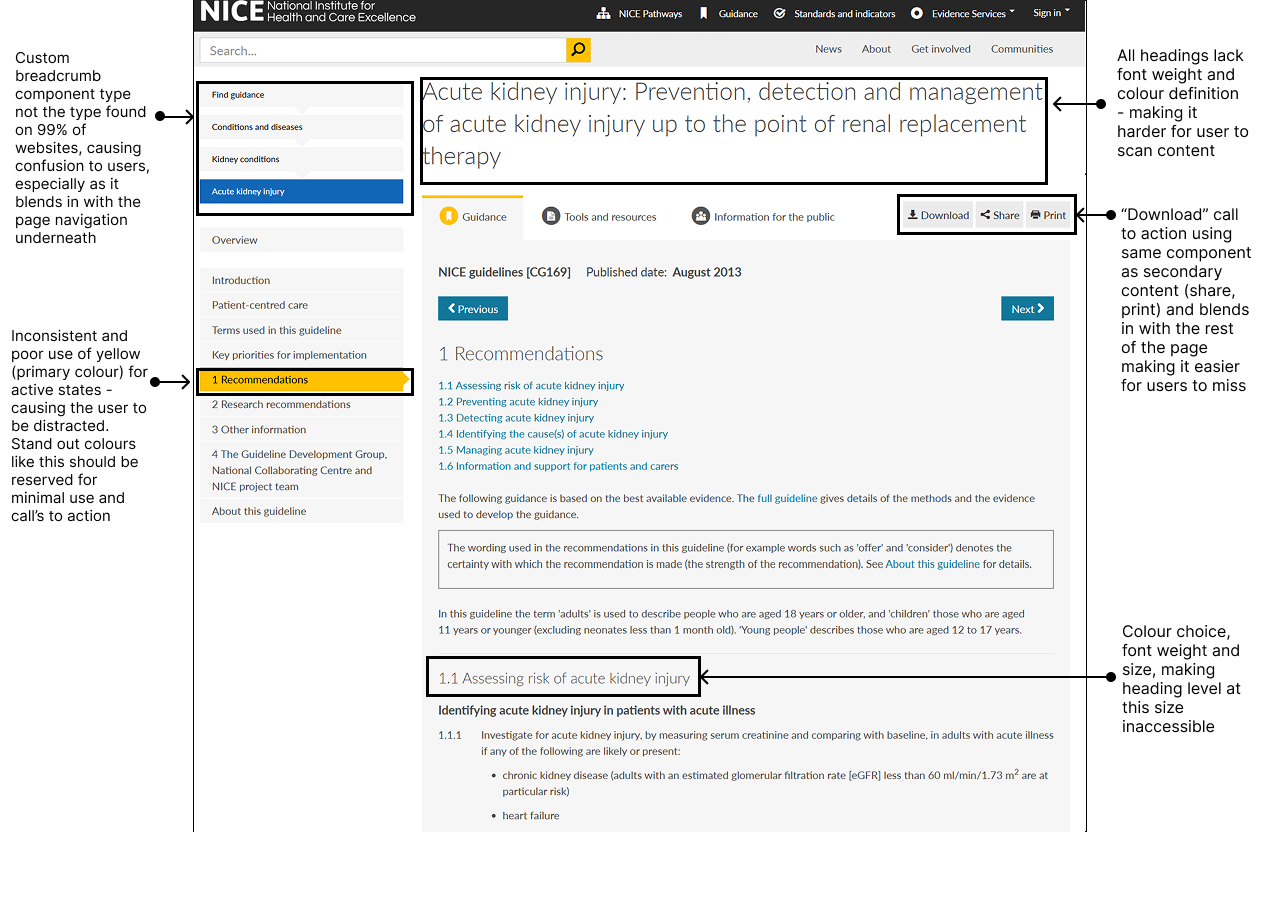
NICE operates a complex ecosystem of digital services used by over 2.5 million users per month. However, delivery was slowed by fragmented systems and a lack of shared standards.
A heavy reliance on a legacy Bootstrap framework — not built for scale — had created bloated CSS, JS, and fonts that impacted performance. Inconsistent experiences across services had eroded trust in shared components, and accessibility was handled reactively rather than by design. This created duplication across teams, increased delivery time, and made it difficult to scale consistently.
Key challenges included
- Poor and inconsistent user experiences across services
- Heavy reliance on a legacy Bootstrap framework not built for scale
- Bloated CSS, JS, and fonts impacting performance
- Lack of trust in shared components and guidance
- Accessibility handled reactively rather than by design
This created duplication across teams, increased delivery time, and made it difficult to scale consistently.
My Role
As Lead UX Designer, I:
- Built the business case and secured stakeholder buy-in through measurable efficiency gains.
- Defined the vision and strategy for a unified design system.
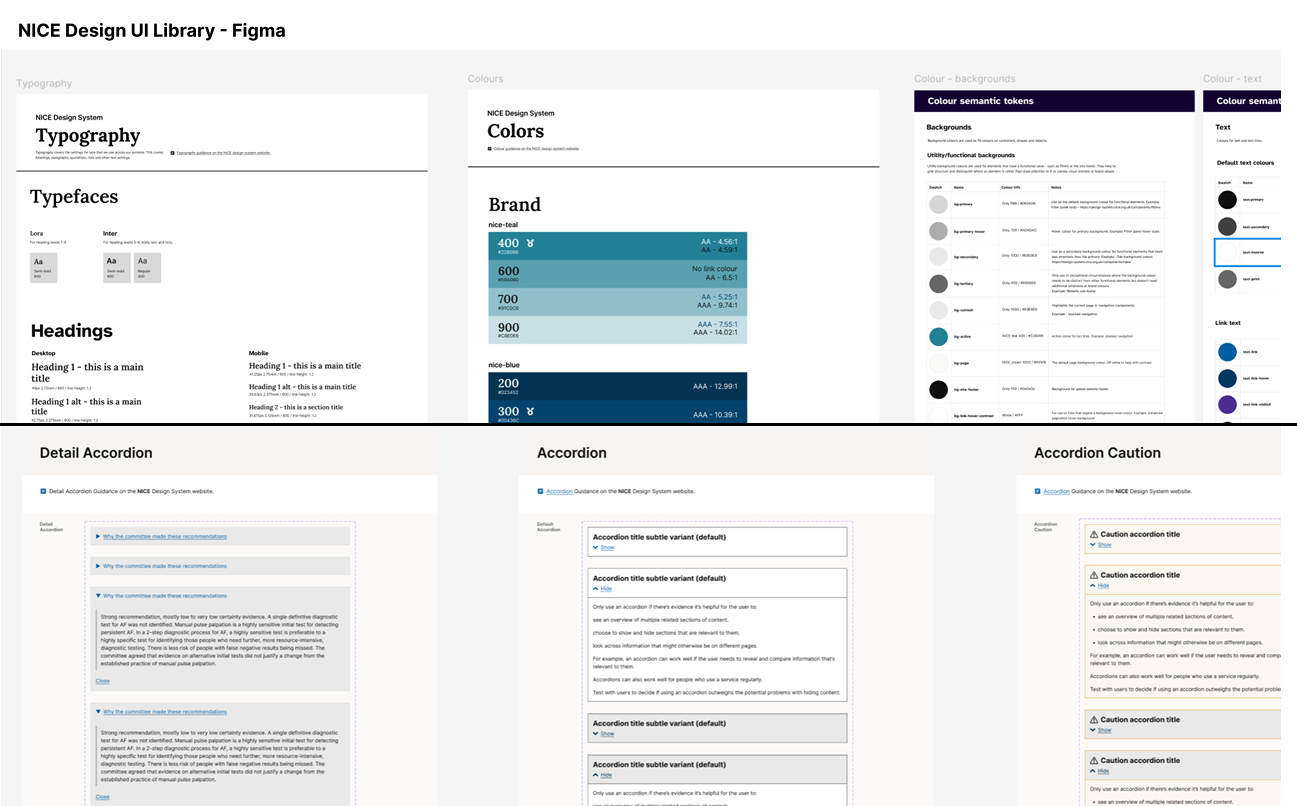
- Led the creation of foundations, components, and content guidelines.
- Established governance and contribution models.
- Drove adoption through team engagement, demos, and embedded delivery.
- Managed roadmap alignment across design, engineering, and product.
Approach
Driving buy-in through delivery
Previous attempts had failed due to being too abstract, siloed, and disconnected from organisational priorities.
I shifted the approach to:
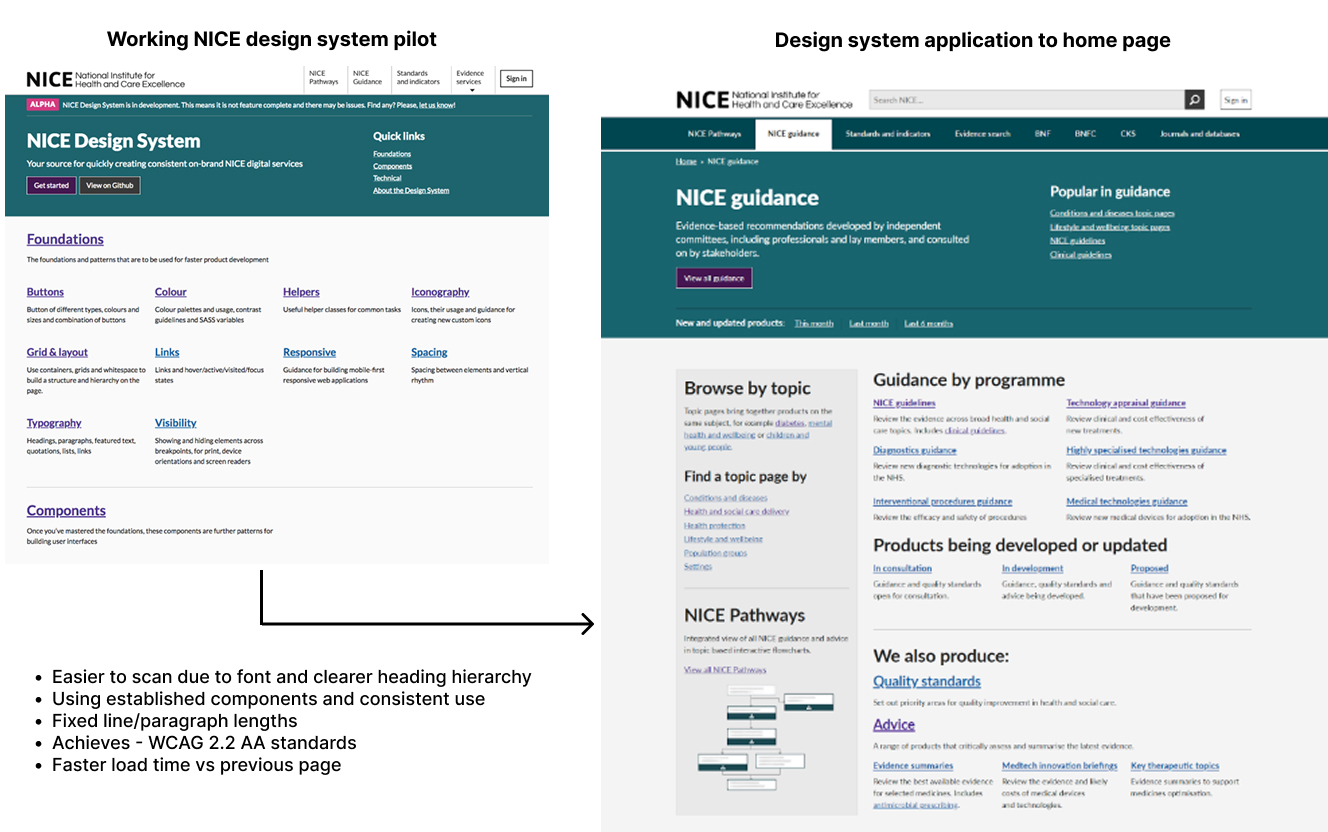
- Build a working pilot instead of a conceptual proposal
- Used real service examples to demonstrate value early
- Adapted proven patterns from public sector design systems to meet NICE's specific needs
Designing for scale under constraints
The design system had to be developed alongside live product delivery, with limited team capacity and competing priorities. A key tension was balancing the flexibility required by content teams with the consistency required by developers. To manage this, I:
- Prioritised high-frequency, high-impact components over edge cases.
- Used unmoderated research to gather insight quickly at scale, trading depth for speed to maintain momentum.
- Used modular components and controlled variants to balance flexibility for content teams with consistency for developers.
- Broke work into small, modular increments, prioritising continuous delivery.
Creating a trusted source of truth
To rebuild trust and support adoption:
- All components were grounded in user research and established standards
- Accessibility (WCAG 2.2 AA) was embedded from the outset, avoiding costly retrofitting later
- Created clear documentation focused on practical usage rather than exhaustive detail
- Established feedback loops — accepting that the system would evolve rather than attempting to get everything right first time.
Impact
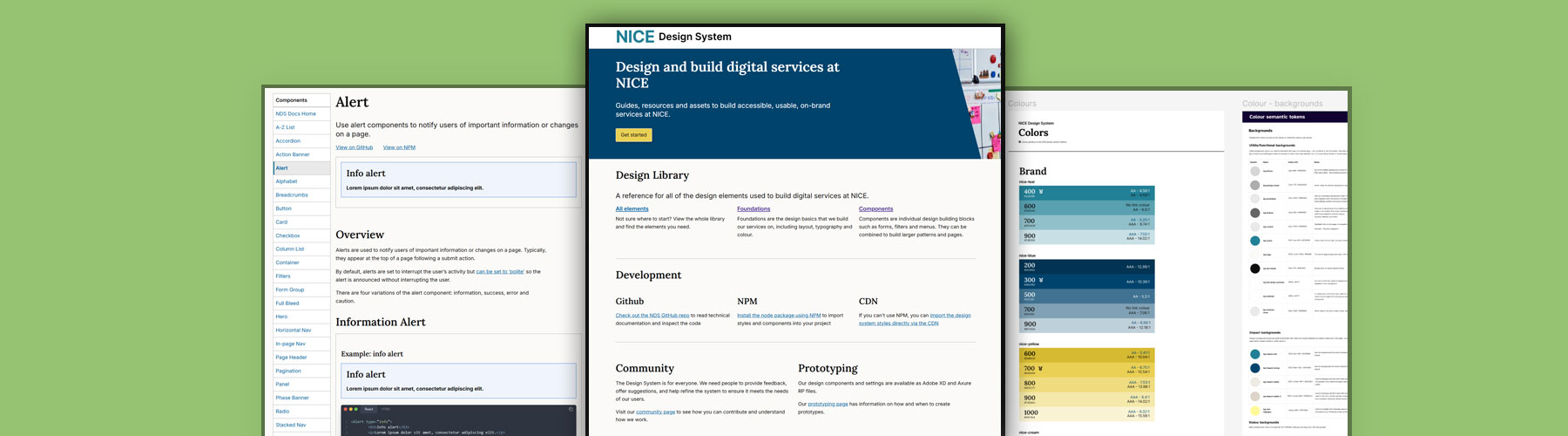
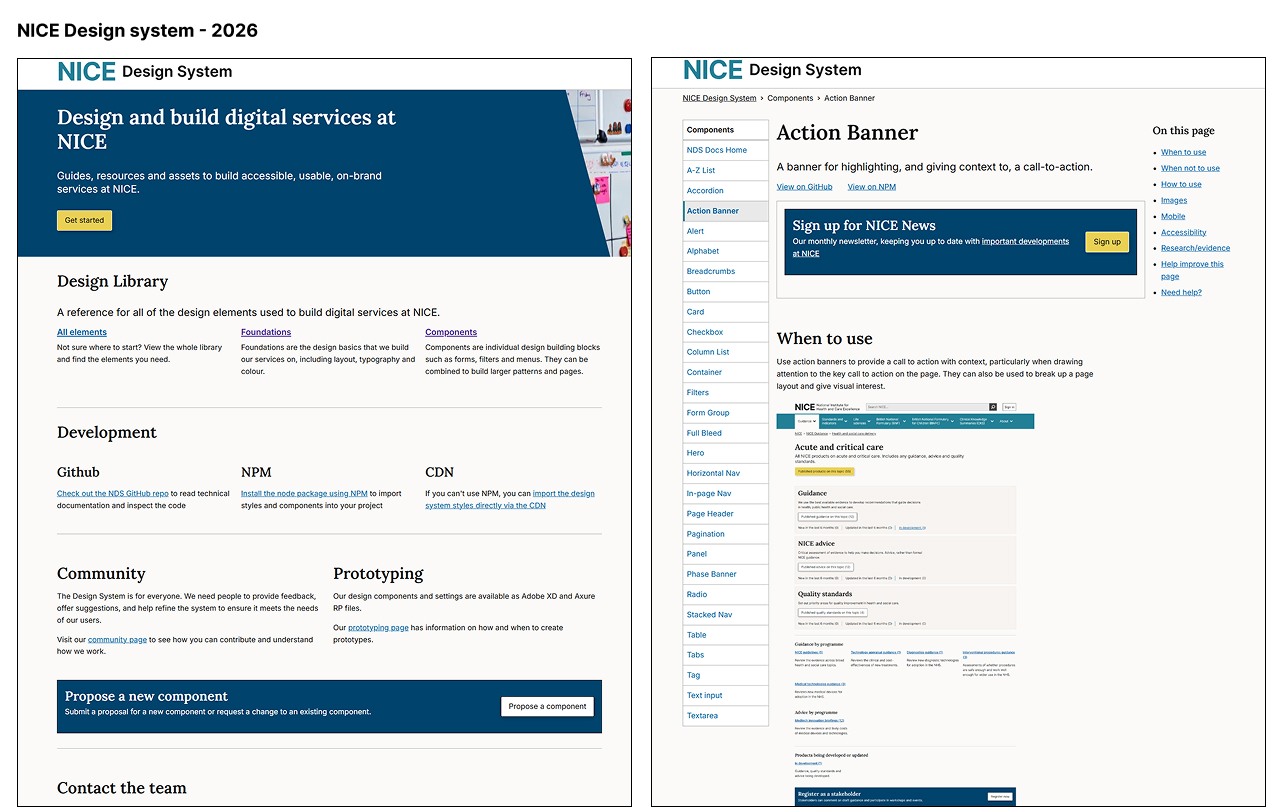
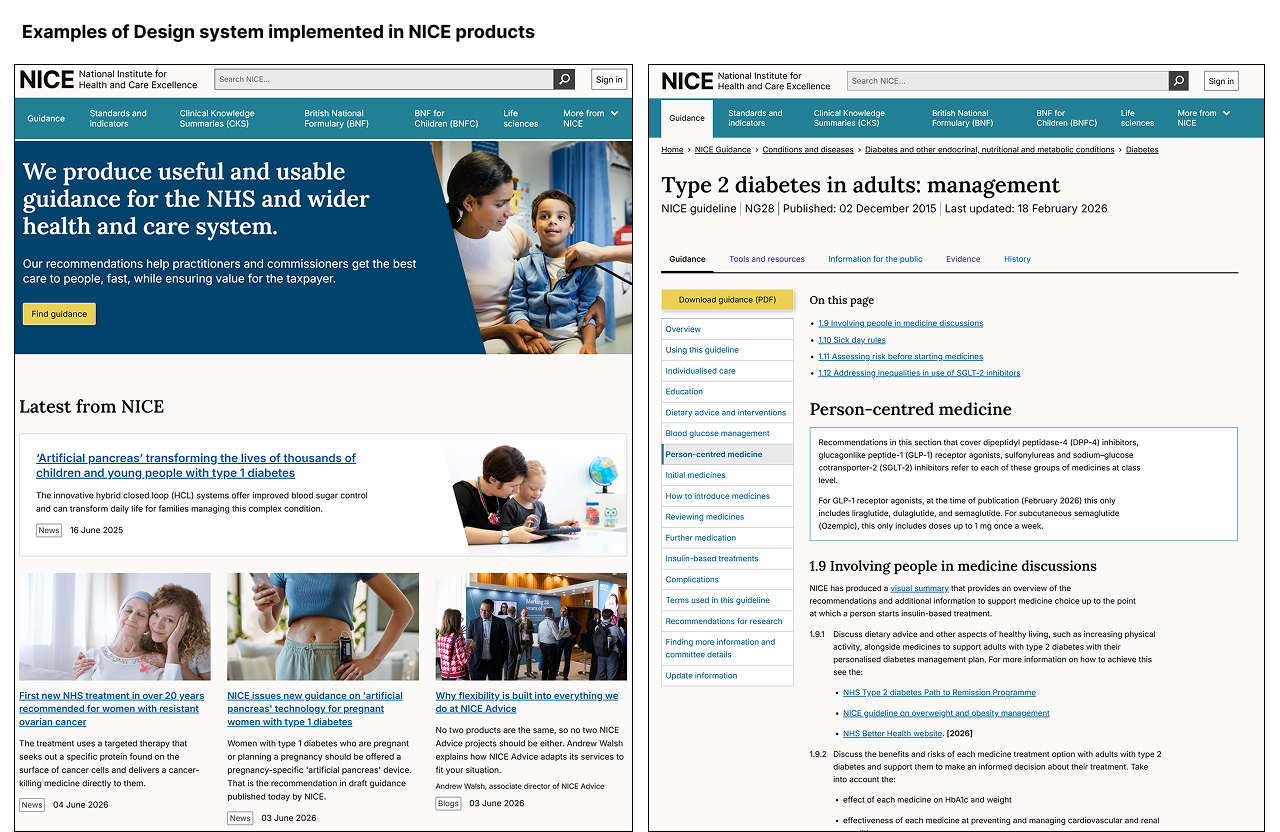
The NICE Design System is now the foundational framework for building and maintaining digital services at NICE, powering 30+ products and serving as the definitive source of truth for both internal teams and external agency partners. My role now focuses on bridging the gap between design and delivery, managing the roadmap with cross-functional stakeholders and driving adoption through monthly show-and-tells.
Quantitative
- 13% reduction in delivery effort — benchmarked against legacy workflows across a 4-month project lifecycle for a team of 5.
- 32% reduction in page load time — across a sample of 200,000 user sessions, accelerating access to critical guidance.
Qualitative
- Consistent user experience across 30+ products.
- Accessibility embedded into delivery, reducing compliance risk.
- Increased trust and adoption across teams.
- Reduced design-and-development rework through a unified Figma-to-code design token infrastructure
Strategic
- Established a scalable foundation for all new services.
- Shifted teams from isolated delivery to reusable, system-led development.
- Enabled faster onboarding for new designers and developers.
- Created a single source of truth for internal teams and external partners.
What I Learnt
- Adoption is the product. Shipping a high-quality design system is only half the challenge. Its value is realised through adoption. I learned to invest as much in advocacy, onboarding, and documentation as in the components themselves.
- Prioritisation drives momentum. With limited team capacity, I had to be deliberate about what not to do. Focusing on high-frequency, high-impact components and breaking work into small increments allowed us to maintain momentum and deliver continuous value without overextending the team.
- Technical constraints shape delivery. What began as a UX initiative quickly became a complex technical integration. Legacy systems and fragmented architectures slowed adoption more than anticipated. I learned to involve engineering earlier, mapping dependencies and constraints upfront to ensure plans were realistic from the start.