The Challenge
When I joined NICE in 2016, the design 'team' was just myself and one other senior UX designer. At the time, our UCD maturity was low, but the bigger issue was how we were positioned: we were operating almost entirely tactically. Requirements were simply handed down to us, and we were expected to execute them without any room for discovery or validation.
Because we lacked a dedicated research function and shared standards, we were stuck in a reactive cycle — delivering features but never really having a say in the 'why' behind the work. We were building things, but we didn't have the evidence to know if we were actually solving the right problems for our users.
My Role
Working at the delivery level, I identified significant operational risks rooted in a lack of UCD maturity, which frequently resulted in features being developed without a validated link to user needs. My role was to mitigate these risks by establishing high professional standards and aligning our capabilities with the DDaT framework to ensure the quality of our output.
I acted as the strategic design and research link to the wider organisation, navigating our transition from a reactive team that simply "delivered requirements" to a proactive partner embedded in the end-to-end product discovery and delivery cycle — consistently demonstrating the ROI of evidence-based design.
The Approach
Establishing foundations. To remove inconsistent practices, I developed a suite of professional frameworks — including a UCD Playbook, a structured Design Critique process, and Decision Logs to ensure rationale was captured and efforts weren't duplicated. This was backed up by ongoing work to build, maintain, and improve the NICE Design System.
Intentional growth and advocacy. To grow the UCD function, I implemented a long-term advocacy strategy centred on evidence. I mapped the team's output to the DDaT Capability Framework, highlighting where critical skill gaps — like User Research — were limiting our impact. By consistently showcasing the link between high-quality research and improved product performance, I built the internal business case for specialised roles, evolving the team from a pair of generalists into a comprehensive UCD department.
"My ambition was never just to build a big team, but to build one which was diverse and effective and could genuinely make things better for our users."
Inclusive recruitment. I modernised our hiring to remove exclusionary barriers — rewriting job descriptions to focus on potential over unnecessary degree requirements. I also introduced transparent interviewing, providing candidates with questions 24 hours in advance to move away from performative testing and toward evidence-based assessment.
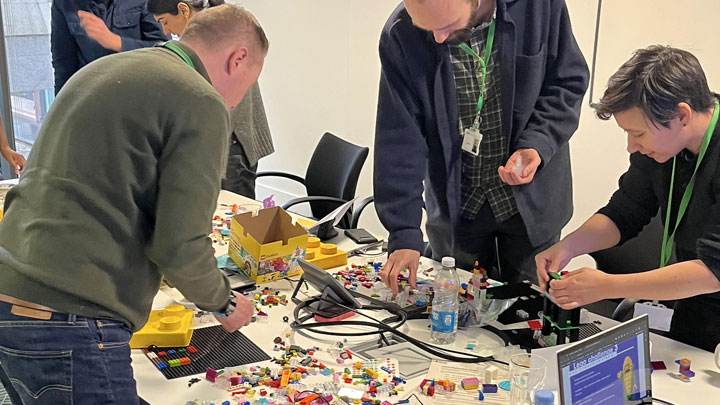
Strategic positioning. I transitioned the team from tactical delivery to a strategic partner by embedding myself within leadership forums. I shifted the dialogue from outputs to outcomes by challenging the rationale behind new work — interrogating the 'why', the user need, and the intended impact. I formalised this by facilitating stakeholder workshops to reframe vague requests into structured workplans, using hypothesis statements and discovery roadmaps to ensure every project was directly aligned with organisational goals.
Outcome
- Team expansion and mentorship — scaled the UCD function from a pair of designers to a multidisciplinary team of seven, encompassing User Research, Service Design, UX, and Digital Performance. As a line manager and mentor, I've fostered a high-performing culture through structured 1-to-1s and collaborative team sessions, empowering the team to advocate for their own growth
- Industry-leading diversity — built a team where 50% of members come from underrepresented groups, directly reflecting the diverse user base NICE serves
- High retention and growth — created a thriving culture with low turnover and multiple internal promotions, resulting in a respected team known for high-value delivery
- Increased UCD maturity — shifted the organisation toward a proactive, discovery-led culture, ensuring we now solve the right problems and achieve better outcomes for both users and the organisation