Outcome
Problem & Context
When I joined NICE, product delivery was structured around converting organisational requests directly into delivery. Solutions were predefined before the problem had been explored, meaning teams optimised delivery efficiency rather than solving the right problems.
This operating model meant design was engaged late, user research was largely absent, and decisions relied heavily on stakeholder assumptions rather than evidence. As a result, investment was directed towards requested features rather than validated and improved outcomes, increasing delivery risk and limiting organisational learning.
My Role
- Defined the strategic direction for multidisciplinary design, aligning capability, governance and ways of working with organisational priorities.
- Built and led a multidisciplinary design function, growing the team from three to seven specialists through recruitment, mentoring/line management, capability frameworks and communities of practice.
- Partnered with Product, Delivery and Policy leaders to embed evidence-led decision making into product planning and prioritisation.
- Established governance, quality standards and communities of practice that enabled user-centred design to scale across multiple teams.
Approach
Rather than attempting large-scale change, I took an incremental approach: demonstrating the value of evidence-led decision making, building multidisciplinary capability, and embedding it into organisational decision making.
Demonstrating the value of evidence-led decision making
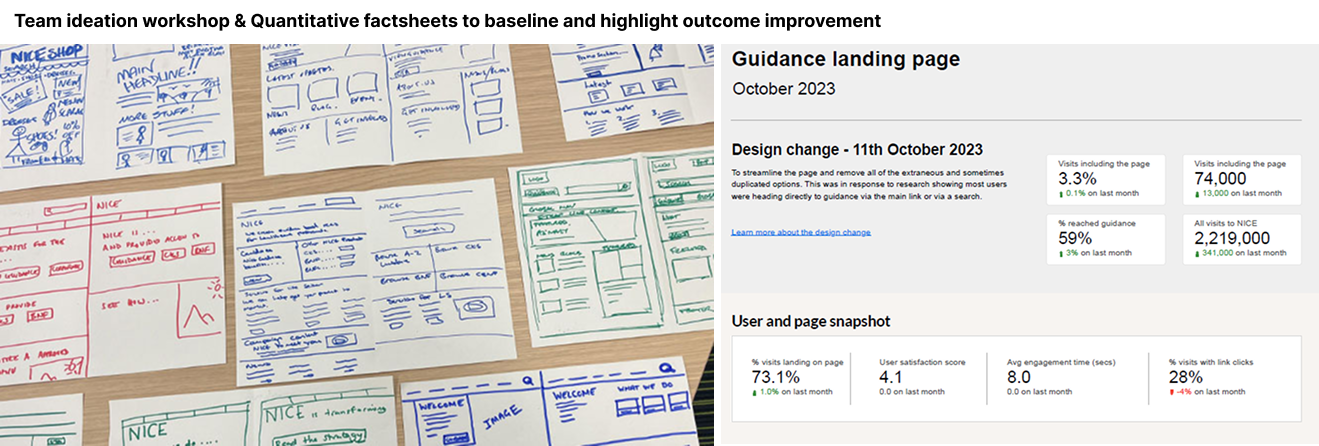
The operating model created a reactive, solution-led approach to delivery, limiting opportunities to understand problems before committing to solutions. With limited capacity and low organisational confidence in this way of working, I protected one day a week to focus on a small number of high-impact opportunities, trading broad coverage for measurable outcomes that demonstrated the value of evidence-led decision making.
- Established baseline success measures with the Digital Performance team.
- Combined research, analytics and usability findings to validate assumptions and inform product decisions.
- Prioritised CMS-led improvements that delivered measurable impact without competing for scarce engineering capacity.
- Framed recommendations around user outcomes, delivery and reputational risk and organisational value.
This demonstrated that evidence-led decisions, rather than assumptions, improved product outcomes. Over time, this built organisational confidence in the approach, increasing demand for multidisciplinary ways of working and enabling stakeholders to prioritise work using evidence rather than opinion or preference.
Building the multidisciplinary capability to scale better decisions
Having established evidence-led decision making as a trusted approach, the next challenge was scaling capacity. While there was organisational pressure to increase generalist design skillsets to meet immediate demand, I made the case for specialist capability, trading short-term delivery gains for long-term organisational capability and better decision making. To do this, I:
- Reviewed organisational delivery challenges and assessed capability against Profession Capability Frameworks, to define the specialist capability needed for multidisciplinary delivery.
- Built the business case for dedicated User Research and Service Design capability, demonstrating how specialist expertise would strengthen organisational decision making and improve outcomes.
- Embedded multidisciplinary specialists into product teams, establishing continuous research and design feedback loops supported by mentoring and capability frameworks.
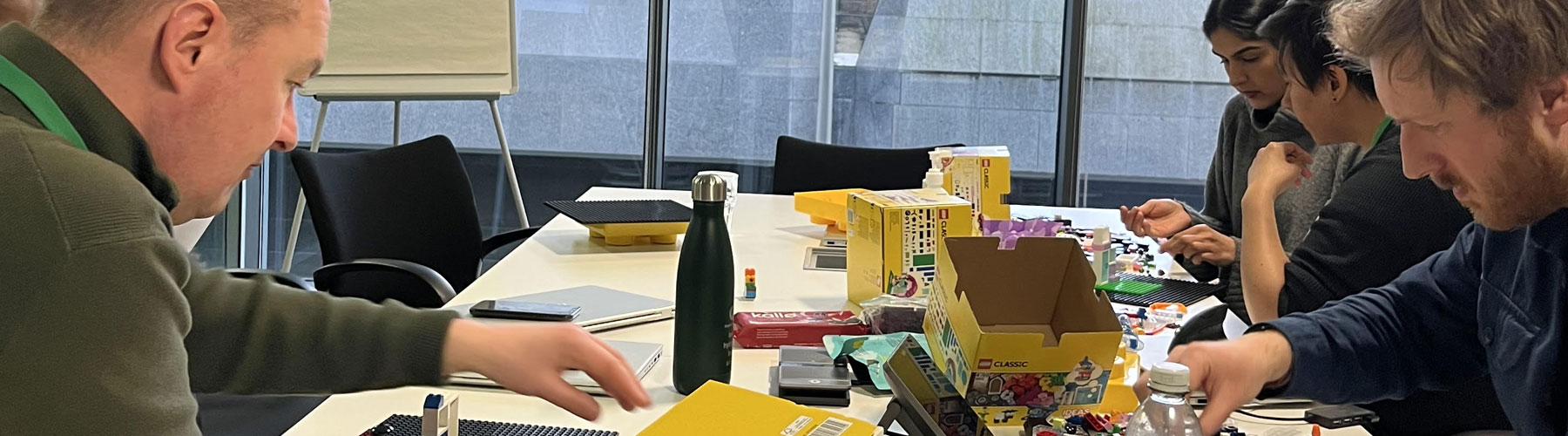
The function grew from three designers to a multidisciplinary team of seven, enabling the organisation to scale evidence-led decision making. This meant stakeholders across multiple teams could consistently prioritise work using robust user evidence rather than assumptions, improving decision quality, reducing delivery risk and delivering better outcomes.
Embedding capability into organisational decision making
Although multidisciplinary capability had improved decision making, it was not consistently positioned to influence key product and portfolio decisions before delivery commitments were made. With limited capacity and established planning processes, I prioritised positioning multidisciplinary capability at the highest-impact decision points, trading broad organisational coverage for deeper influence where decisions shaped outcomes.
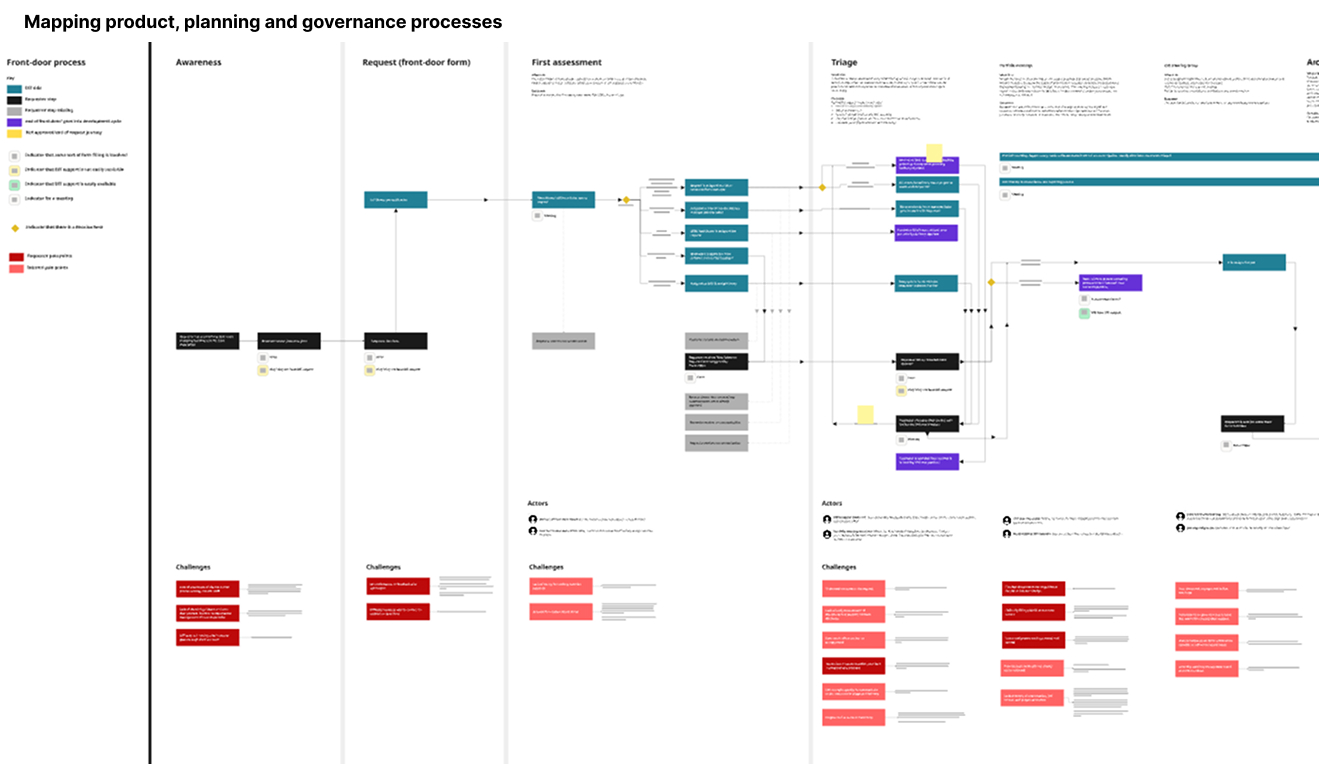
- Mapped product, planning and governance processes to identify where multidisciplinary expertise could have the greatest influence on decision making.
- Worked with stakeholders to prioritise the highest-impact, most feasible opportunities to position multidisciplinary capability across product planning, prioritisation and governance.
- Embedded research and interaction design capability within key product and governance decision points, creating continuous feedback loops that informed prioritisation, planning and investment decisions.
- Placed service design across product teams to inform, align and shape programme level decisions, informing prioritisation, planning and investment decisions.
This positioned multidisciplinary capability at the right points in the organisation to influence decisions before delivery commitments were made, enabling stakeholders to make product and portfolio decisions using evidence rather than assumptions, improving prioritisation, reducing delivery risk and delivering better outcomes.
Impact
- Earlier multidisciplinary involvement, embedding User Research, Service Design and Interaction Design into planning and governance.
- Evidence-based prioritisation, replacing assumption-led decision making with validated user insight.
- Problem-led approach, reducing delivery risk before implementation.
- Cross-functional collaboration, strengthening shared ownership across Product, Delivery and UCD.
- Strategic influence, establishing UCD as a trusted partner in organisational decision making.
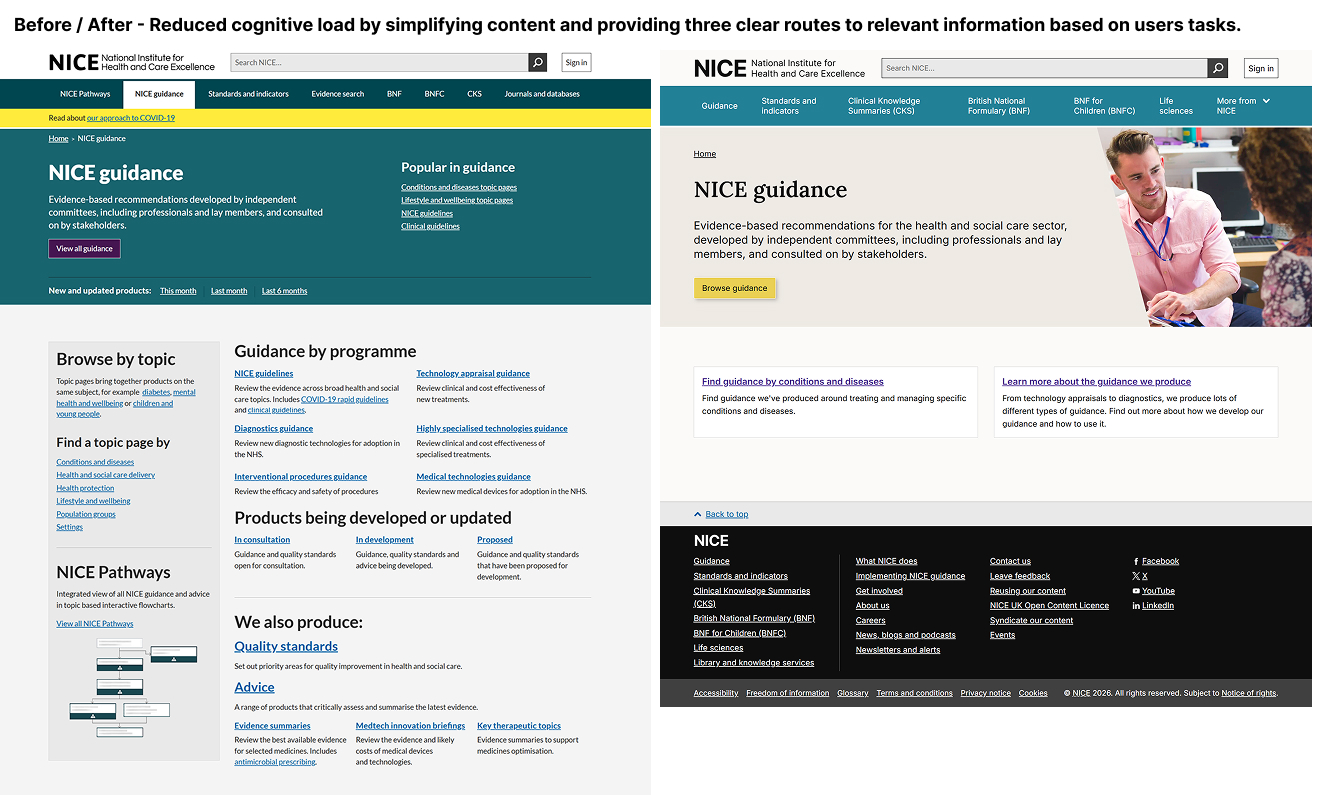
This capability directly contributed to measurable improvements across NICE's core guidance journeys, including:
- 29% increase in visits resulting in guidance link clicks.
- 36% increase in visits across redesigned guidance journeys.
- 14% reduction in time spent searching for guidance (22s → 19s).
What I Learnt
Evidence builds credibility
One of the biggest shifts in my leadership has been moving from advocating for user-centred design to demonstrating its value. Repeating the message rarely changed minds; consistently delivering measurable improvements and connecting them to business outcomes did. Combined with strong relationships and a pragmatic approach, this became the foundation for influencing decisions and creating lasting organisational change.
Build teams and the conditions for them to succeed
Recruiting new roles was only the beginning. Building a high-performing team took time, developing trust, understanding each other's strengths, and creating a low-ego culture through regular communication, shared learning and time together. Equally important was creating the organisational conditions for those roles to thrive.
Create the conditions for change
Building a capable team and adopting an evidence-based approach wasn't enough on its own. We were still constrained by decisions being made too early, before UCD had an opportunity to influence the problem. I learned that sustainable transformation comes from incrementally improving the system rather than mandating new ways of working. By creating the conditions for earlier collaboration, embedding feedback loops and consistently demonstrating value, multidisciplinary design became part of how the organisation made decisions.